
Beyond the Ballot Box: Midterms and Markets in Perspective
In the 2026 midterm elections, control of Congress is up for grabs, and the result will shape our nation’s legislative agenda for the next two years. While we aren’t political commentators at Warren Street, we do dabble in the dark arts of politics when they touch markets.
Our read of the data confirms that in the short-term, markets get choppier as investors price for uncertainty. Over longer horizons, returns still answer to earnings and economic growth. This time though, the election coincides with a generational technological shift, which we believe is also worth a closer look.
The Current State of Play
Between an elevated cost of living, AI data-center build-out, and mortgage rates climbing, midterm candidates are wrestling with issues that shape the lives of every American. The binding constraint on midterms – however – is inflation. With Iran’s continued attacks on energy infrastructure, they’ve kept oil prices elevated enough to pressure the administration’s midterm chances without tipping the world into recession.
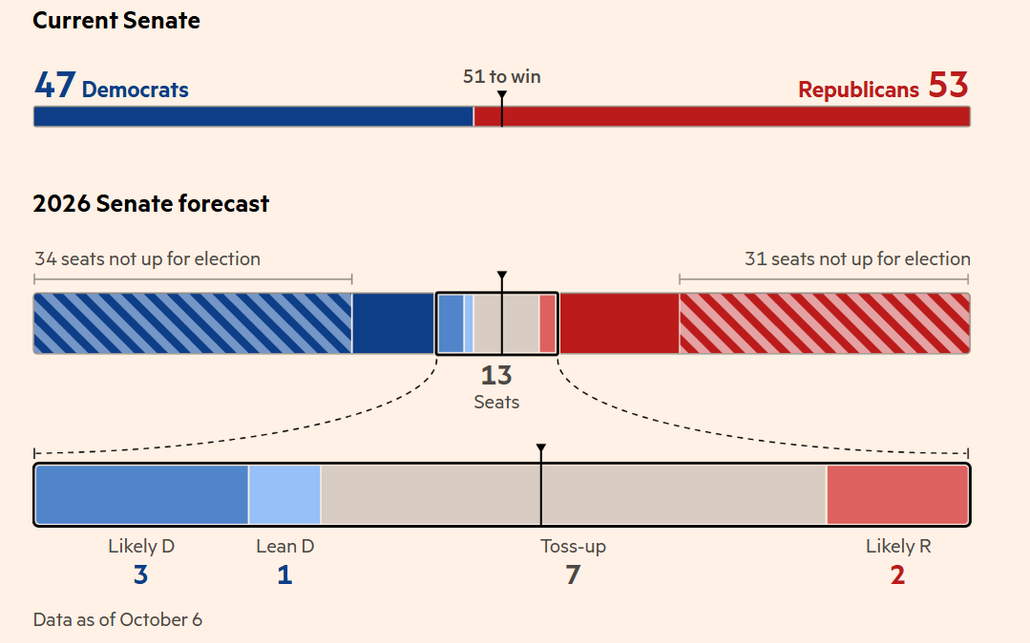
This has had a real influence on the prospects for the House and the Senate. Markets are currently pricing a Democratic House, linked back to a razor-thin majority from Republicans and expectedly uncompetitive races. Meanwhile, the Senate was initially a toss-up that has since shifted towards the Democrats, with betting markets placing a clean sweep above even odds for over a month.
A Close Race in the Senate
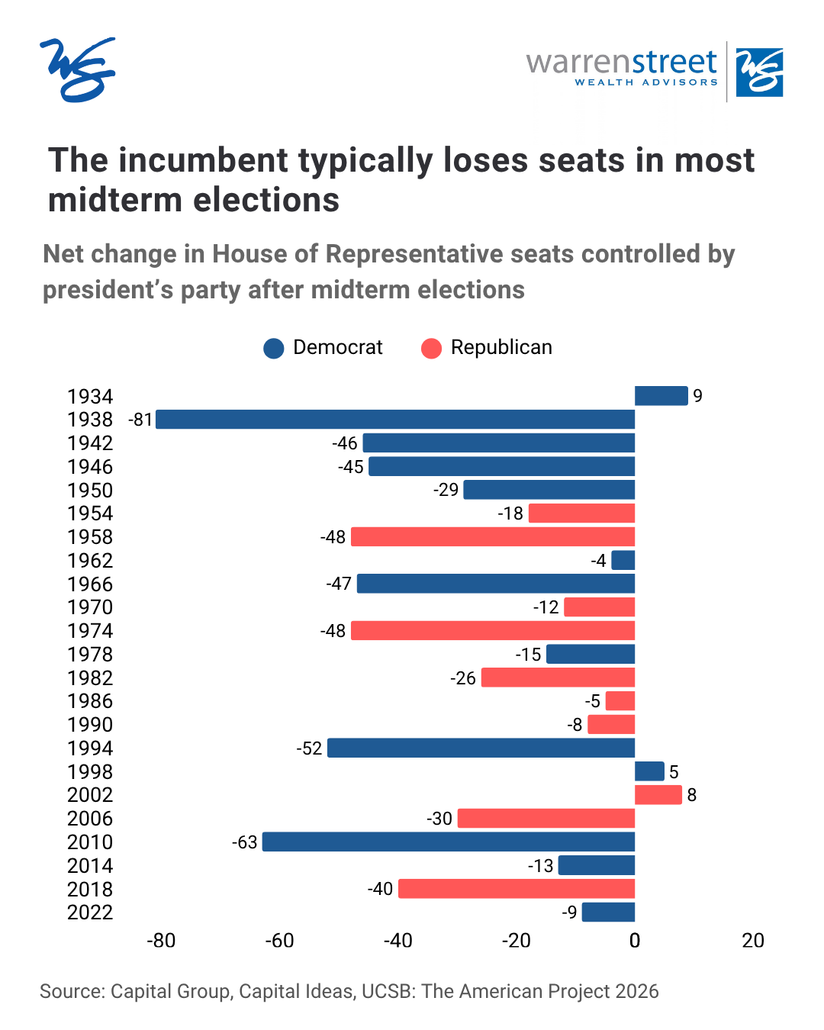
None of this is particularly unusual. Across the last 23 midterms dating back to 1934, the president’s party has lost an average of 27 House seats and three Senate seats for two primary reasons: 1) the party out of power has a greater voter turn-out and 2) presidential approval ratings – regardless of party – typically dampens in the first two years. These factors work together to, at times, make races tighter than one would expect.
Looking at the Data
It’s common for returns to start shaky in midterm years before accelerating as markets bypass initial uncertainty and as outcomes become more crystallized. However, midterm years have historically weighed on returns, with the S&P 500 averaging an annualized 4.7% in midterm years versus a 9.5% return in all other years, dating back to 1931.
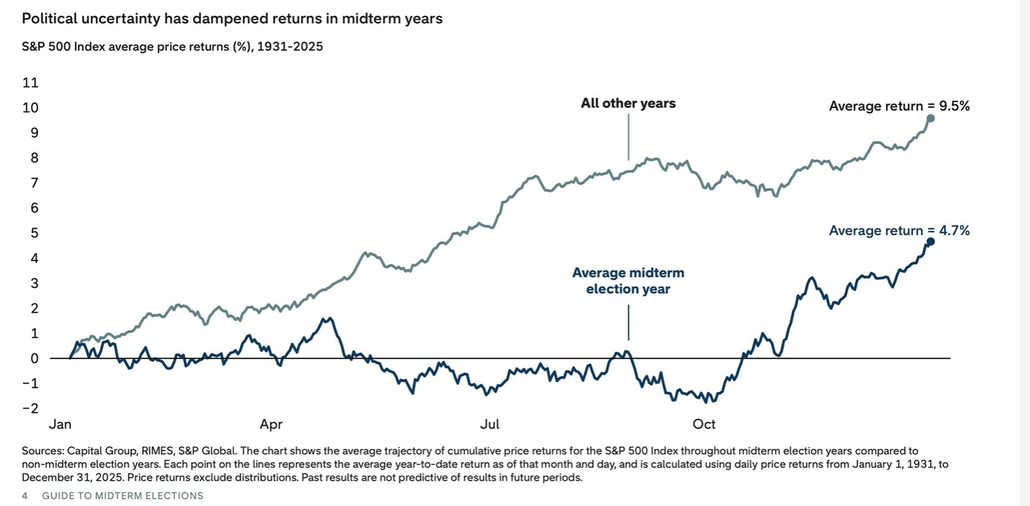
As expected, volatility also increases with the uncertainty that is accompanied by midterms. Since 1970, the median movement from the average return is 16% compared to 13% for non-election years.
What’s reassuring, however, is the longer-term trajectory of markets. Since 1950, the average one-year return following a mid-term election is 15.1% – twice the 7.4% average for subsequent returns in other years. That’s because although markets may experience a re-pricing in the short-term, companies eventually adapt. Earnings and economic growth finds a way of re-accelerating in the world’s most refined capital markets despite a new political regime.
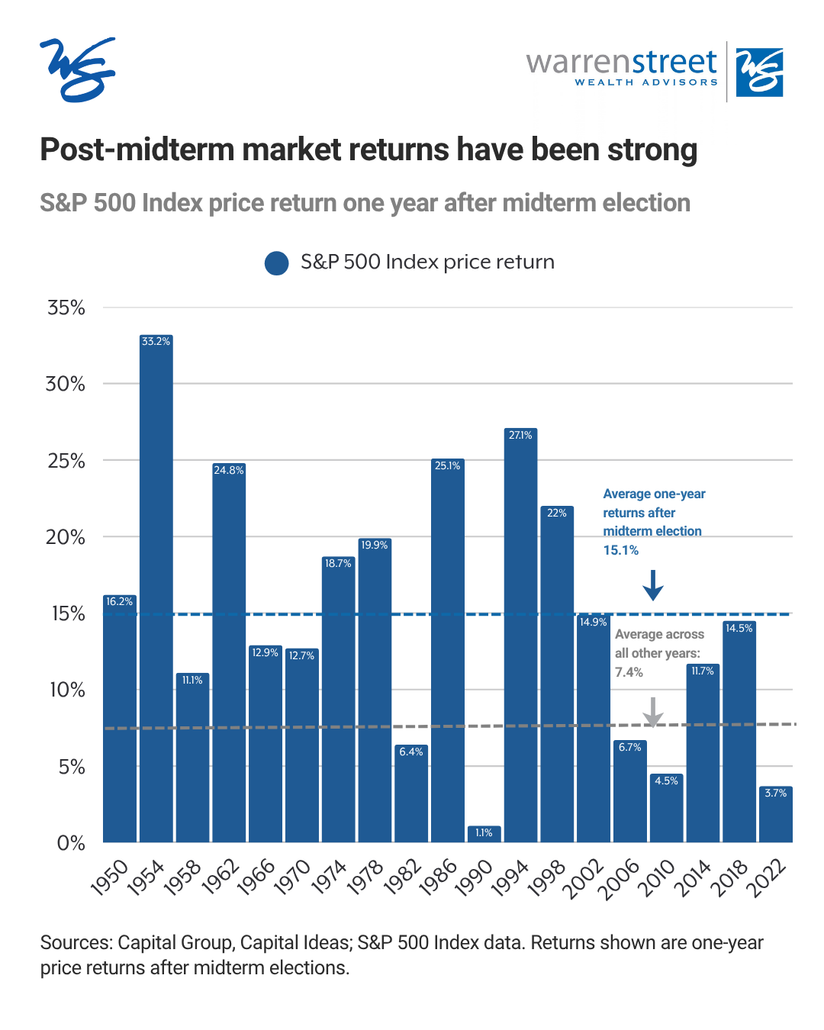
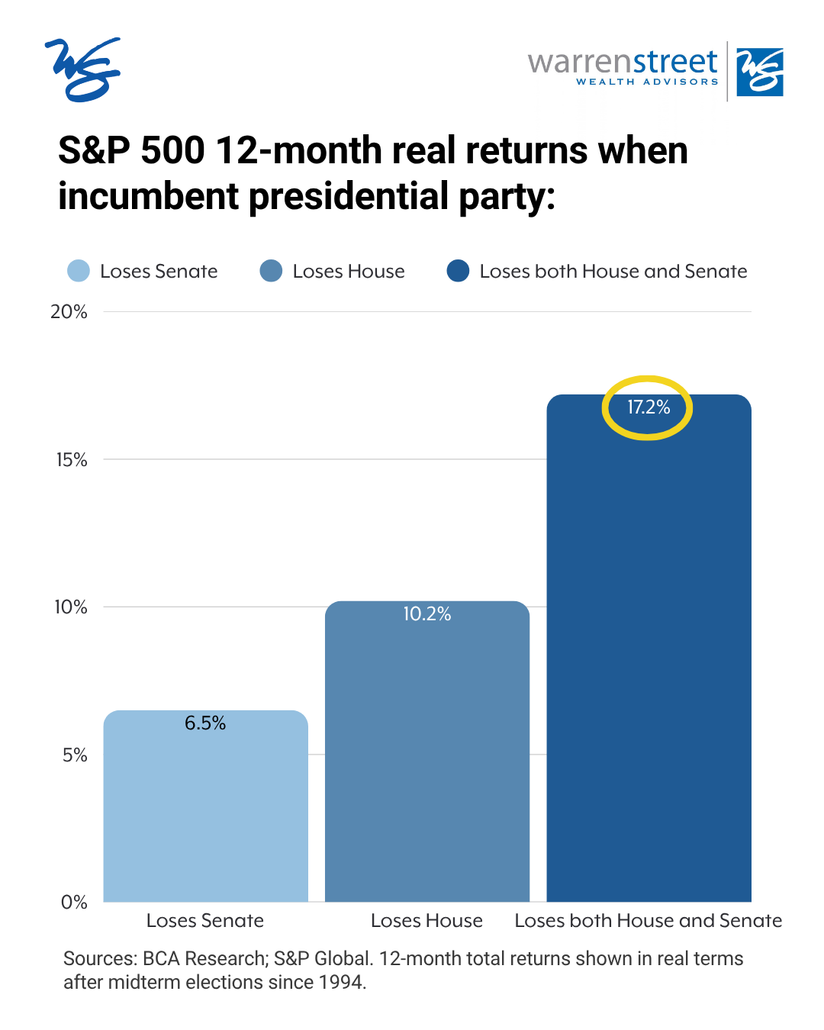
Lastly, the configuration of the entire administration matters less than some would think. Since 1933, markets have averaged double-digit returns under unified government and a split congress.
The Most Favorable Configuration Would be a Democratic Sweep
Beyond the Ballot Box
It’s tempting to focus on the election’s immediate winners and losers. As long-term investors, though, we’re watching the structural catalysts that drive long-term returns. Specifically, what implications might the midterms have on the AI trade? It’s no secret that AI has a PR problem, compounded by environmental and Not in My Back Yard (NIMBY) pushback from local communities. Ballot measures in eight states could delay, limit, or outright prohibit large-scale data centers, and polling shows that the distaste is bi-partisan.
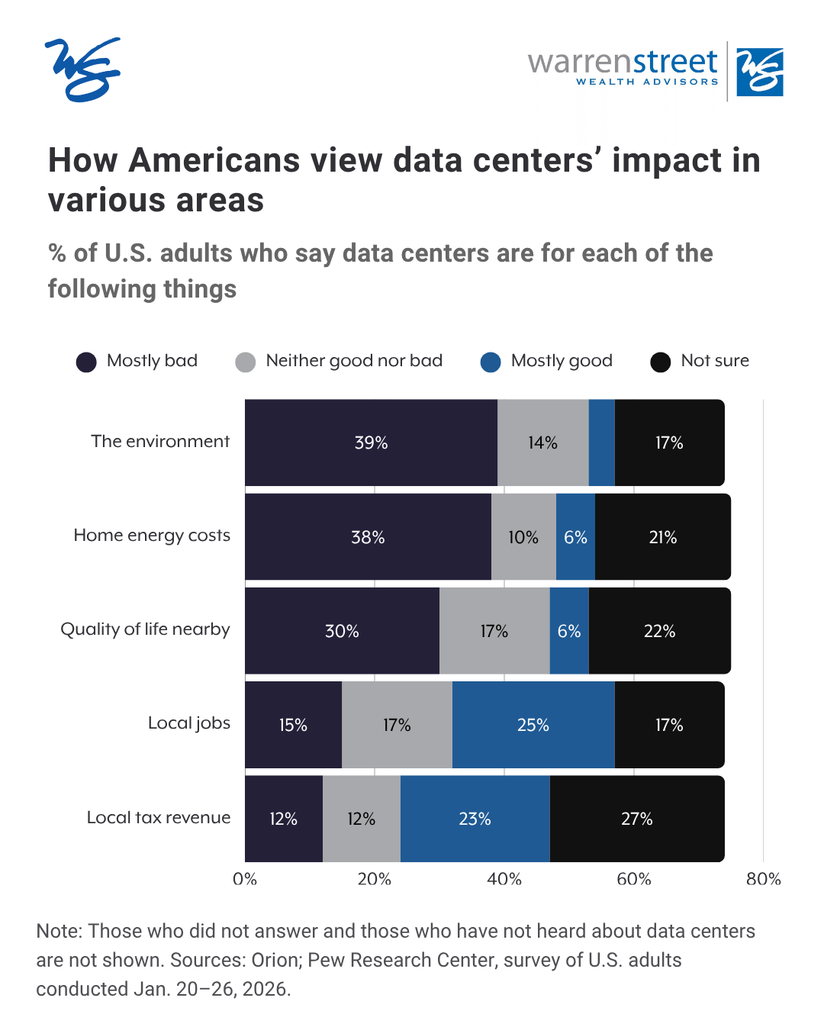
While we don’t think today’s dissatisfaction is enough to halt the build-out, history does show that public sentiment can convert into regulation. Dodd-Frank followed the backlash against banks and nuclear development stalled after Three Mile Island and Chernobyl. The timing matters too, with AI Hyperscalers leaning on debt to fund this infrastructure, which in turn pushes their free cash flow negative. If voters pressure candidates into action, the risk isn’t necessarily a full-stop on AI infrastructure – it’s whether there is a slowdown meaningful enough to test investors who are already working with a thin margin for error.
Investment Implications
Midterms may introduce short-term volatility, but our structural positioning in portfolios hasn’t changed. We remain constructive on well-diversified portfolios with an international tilt, and we’re deliberate about how much AI exposure we hold both home and abroad. Domestically, pairing market-cap weights with a quality tilt continues to perform. Internationally, the Emerging Markets index has become a concentrated AI bet, so we’ve balanced that “growth” exposure with value-oriented companies that return capital via dividend yields and stock buy-backs.
These changes aren’t market timing. They reflect our standard operating procedure of starting with the global opportunity set, diversifying sources of risk and return, and rebalancing as markets move. That discipline is what helps us keep clients from over-or-under-reacting to market swings, regardless of what grade we get from the nation’s upcoming “midterm” exam.

Phillip Law, CFA
Senior Portfolio Manager
Warren Street Wealth Advisors, LLC., a Registered Investment Advisor
The information presented here represents opinions and is not meant as personal or actionable advice to any individual, corporation, or other entity. Any investments discussed carry unique risks and should be carefully considered and reviewed by you and your financial professional. Nothing in this document is a solicitation to buy or sell any securities, or an attempt to furnish personal investment advice. Warren Street Wealth Advisors and/or its clients may hold positions in the securities mentioned. Holdings may change at any time without notice. Due to the static nature of content, securities held may change over time and current trades may be contrary to outdated publications. Form ADV available upon request 714-876-6200.
Sources: