
5% and Counting: Is the US Treasury Back?
One of the most prominent headlines in financial media today surrounds a less sexy asset class: US government bonds (a.k.a. Treasuries). Think about a Treasury as an IOU where you’re loaning money to the US government, with the goal of collecting interest and principal. More recently, yields on the 10-Year US Treasury have breached 5% – a key threshold that influencers and journalists are touting as “critical level” for risk assets. So what’s genuinely pushing these yields higher, and what do we make of it?
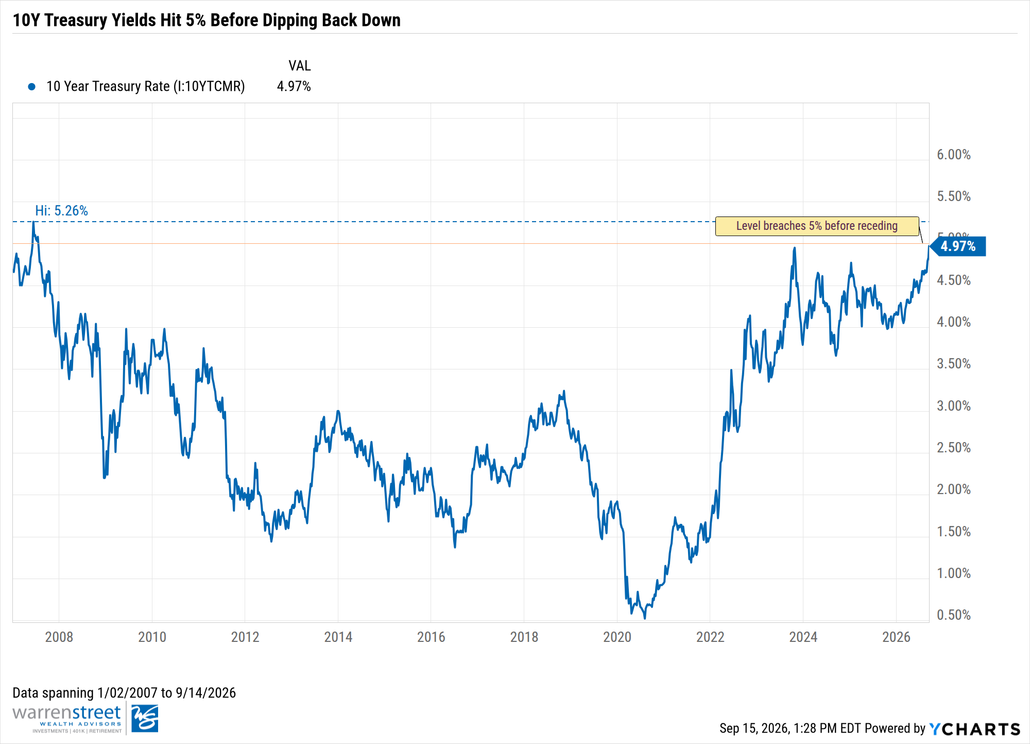
While the 5% level is the highest we’ve seen in nearly 20 years, rates only become truly restrictive when an economy isn’t growing, the private sector is already overleveraged, and resources sit underutilized. None of that describes the US’ position today, but the timing of this surge does feel eerie (alongside conversations around AI doom), linked to a myriad of factors:
- Fed credibility → Central bank credibility has been a lingering concern since President Trump’s public feud with former Fed Chair Jerome Powell, and newly appointed Chair Kevin Warsh’s shaky press conferences didn’t help. Fortunately, Warsh was able to calm market nerves recently by committing more durably to the Fed’s inflation mandate, even if it means raising short-term interest rates.
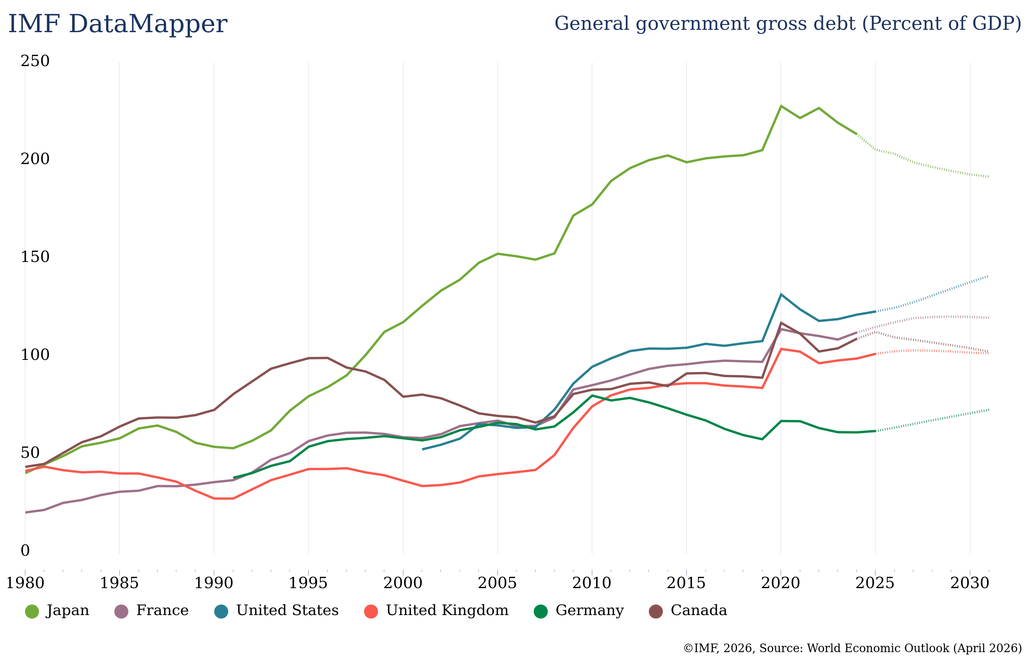
- Fiscal Debt Sustainability → US Debt levels are high, something we share with other developed nations. While we believe that Treasuries remain the cleanest dirty shirt in the hamper (amongst the debt of other nations), persistent deficits and associated interest expense do raise concerns around long-term fiscal sustainability.
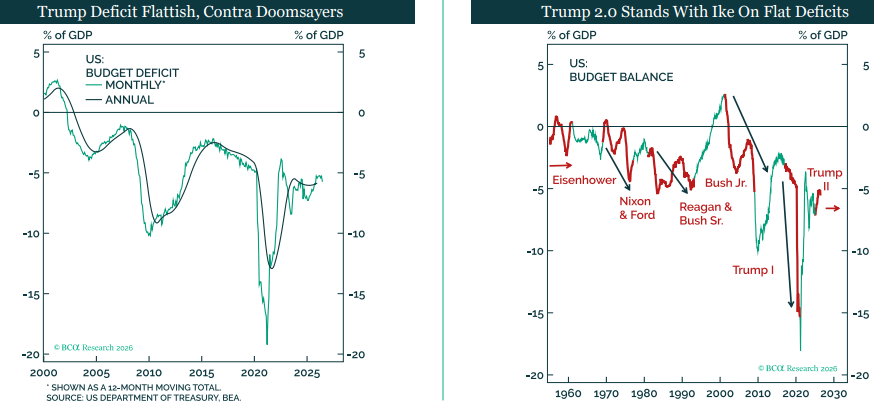
- What’s overlooked is that the rate of deficit growth is surprising to the downside. Higher bond yields and political pushback have capped government spending to an extent. Yes, absolute debt levels are high, but given that markets are about rate of change and surprises, could investors be overindexing on absolute debt levels as a cause?
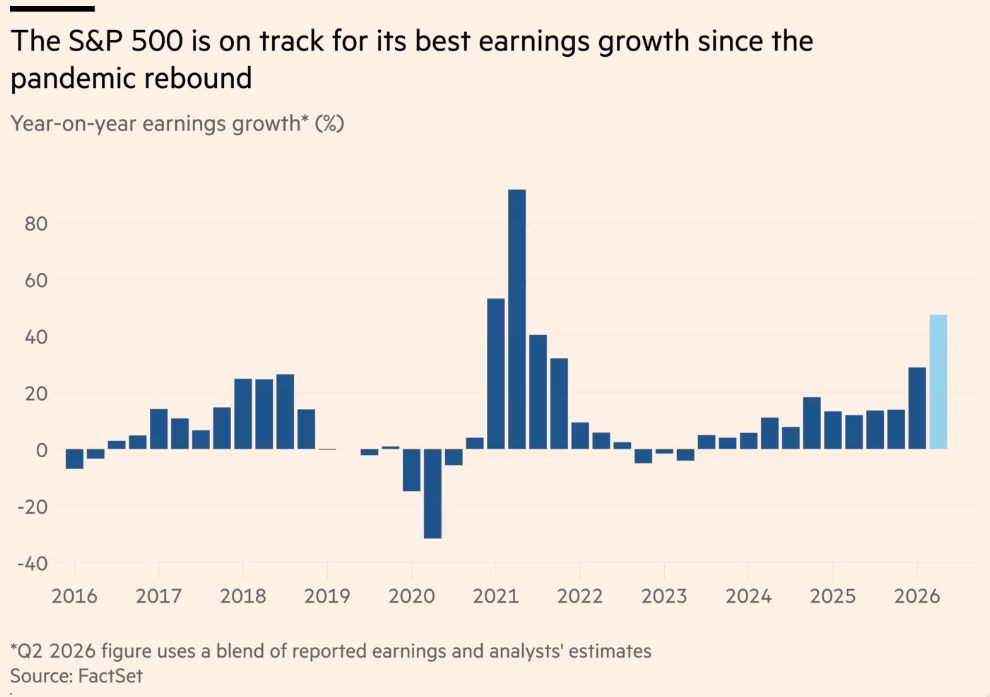
- Real (Strong) Growth → Strong economic growth naturally commands higher yields since investors have more attractive places to put their capital. Nominal GDP is outpacing cost of borrowing per BCA Research, manufacturing and services activity are in expansionary territory, and corporate profits are on a tear (the S&P 500 reported a whopping ~50% year-over-year (YoY) earnings growth last quarter).
- Foreigners (not) Fleeing Treasuries– while there’s been some rebalancing across international balance sheets (to fund national security interests or to rotate into other US bond instruments), we have yet to observe a widespread pullback from Treasuries on international balance sheets or an increase in the pace of selling.
- Unorthodox Fiscal Policy→ you’ll notice we didn’t list inflation as a primary contributor. While inflation is definitely a driver, we believe unorthodox fiscal policy with idiosyncratic impacts on global supply chains is a more relevant culprit. Be it trade wars and forced reshorting of supply chains or waging war against our largest enemy in the middle east (next to a critical resource chokepoint), these instances have resulted in higher prices and driven yields upwards. A more stable policy path could ease both.
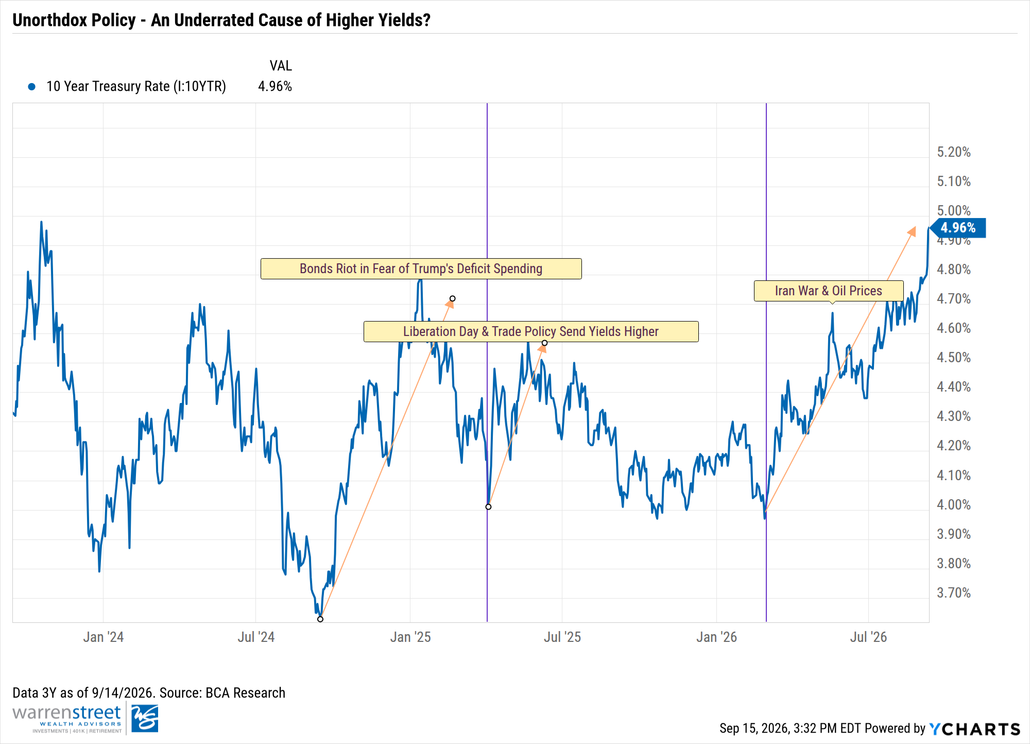
- New Competition for Capital→ AI Hyperscalers like Google are issuing debt to fund AI buildouts – forcing Treasuries to face real competition for investor dollars.
Investment Implications:
What About for Stocks?
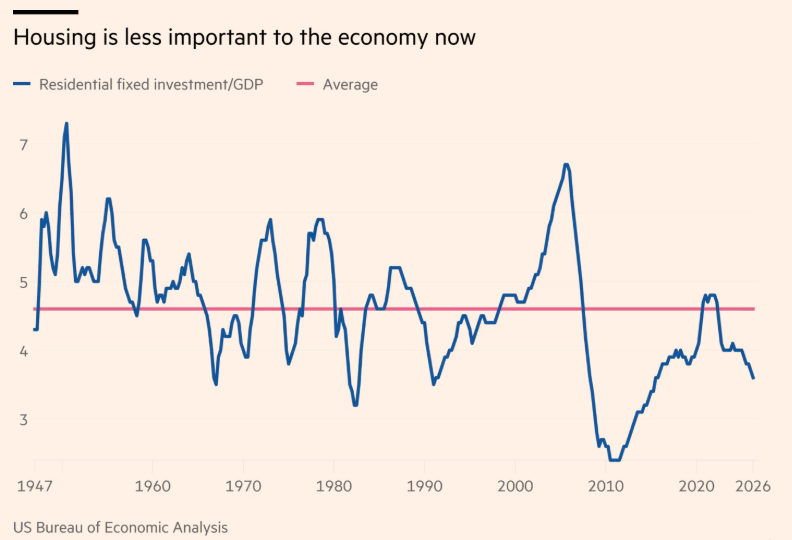
The classic worry is that higher yields suppress stock returns by making borrowing more expensive for home ownership and corporations, while also creating a more attractive entry point for bonds and thus pulling money out of equities. We’ve yet to see that happen. Housing was already soft to begin with, and AI-debt has been rate-insensitive throughout the AI buildout (which also supports the economy through hiring of roofers, electricians, and HVAC teams). Real economic growth estimates for 2026 remain around 2.0% across major institutions.
Meanwhile, the relative value trade-off between stocks and bonds have yet to force a rotation, especially if profit growth across corporate America continues to hold strong (expected to be 28.8% YoY for Q3 2026). The catalyst could be lying in wait, but as of this publication, strong fundamentals have yet to fully curve equity appetites.
What About Treasuries in a Portfolio?
Personally, I believe there’s reasons to be excited to be a bond investor today. Bonds have always played a core role in a portfolio: capital preservation and income generation. Now, longer term bonds can deliver income above inflation, cushion against downside, and diversify against equity risk.
There may be more volatility ahead – especially if the Iran war escalates or if Washington sends confusing signals ($5,000 GOP Checks?), but the US government is finally paying you to hold its debt. Yes, Washington’s balance sheet has its flaws, but global sovereign debt is a relative game. If the world gets messy, I’d feel more at home (no pun intended) owning income-producing US treasuries – backed by the taxing authority of the world’s strongest superpower and the world’s most liquid market – compared to other sovereign debt.

Phillip Law, CFA
Senior Portfolio Manager
Warren Street Wealth Advisors, LLC., a Registered Investment Advisor
The information presented here represents opinions and is not meant as personal or actionable advice to any individual, corporation, or other entity. Any investments discussed carry unique risks and should be carefully considered and reviewed by you and your financial professional. Nothing in this document is a solicitation to buy or sell any securities, or an attempt to furnish personal investment advice. Warren Street Wealth Advisors and/or its clients may hold positions in the securities mentioned. Holdings may change at any time without notice. Due to the static nature of content, securities held may change over time and current trades may be contrary to outdated publications. Form ADV available upon request 714-876-6200.