• Who We Serve
    • Business Owners
    • Individuals & Families
    • Fortune 500 and Large Company Employees
    • New Media
    • Oil & Gas Industry
    • SoCal Edison
  • Services
    • Financial Planning & Retirement
    • Investment Management
    • Tax Planning & Preparation
    • Estate Planning
  • About Us
  • Resources
    • Blog
    • Events
      • Health & Wealth
    • Frequently Asked Questions
  • Partnerships
    • Next Street Tax
    • TownSquare Capital
  • Contact Us
  • Schedule
    • New Clients
    • Current Clients
  • Login
  • Menu Menu

Tag Archive for: health

Navigating Health Insurance Enrollment Season

September 24, 2026/in Education, Financial Planning, General, Retirement/by Emily Balmages, CFP®

As summer winds down and autumn kicks into gear, financial decision-making is probably not top of mind. You may be more accustomed to planning around deadlines such as Dec. 31 or April 15. But fall is an important time to take a fresh look at your health insurance. 

For Affordable Care Act (ACA) Marketplace plans, open enrollment runs from Nov. 1 through Dec. 15 for coverage beginning Jan. 1. Miss that window and you can still choose a plan until Jan. 15, but your coverage won’t start until Feb. 1. Meanwhile, employer plans have their own enrollment periods, which may occur at different times, but frequently in the fall as well. 

Faced with a long list of plans and prices, it can be tempting to stick with the devil you know and re-enroll in your current plan—done! But plan details change every year, and so do your needs. Consider taking a few minutes to review the options available. Here are some things to keep in mind.

Considering Total Annual Costs

A common mistake when choosing a health insurance plan is basing the decision solely on the monthly premium. That’s understandable: The premium is a bill—or a deduction from your paycheck—you need to pay every month, even if you only see a doctor once a year for a checkup. But your actual costs may depend on several factors. Consider also:

  • The deductible. What you generally pay for covered healthcare services before your insurance begins to pay. Some services may be covered before you meet the deductible. A higher deductible often comes with a lower monthly premium.
  • Copays. A fixed amount you pay for a covered healthcare service, such as a doctor’s visit or prescription. Specialist visits can cost more than visits to your primary care physician. 
  • Coinsurance. The percentage of the cost of a covered service that you pay after meeting your deductible.
  • Doctor and hospital networks. Insurers contract with providers in their networks to negotiate prices. Out-of-network visits can cost more—or may not be covered at all. Make sure your preferred doctors are in the plan’s network.
  • Out-of-pocket maximum. The most you’ll pay during a plan year for covered, in-network healthcare services. Your out-of-pocket maximum is frequently higher than your deductible. Once you reach the limit, your plan generally pays 100% of the cost of covered, in-network services for the rest of the plan year. Premiums, out-of-network care and services the plan doesn’t cover generally don’t count toward the limit. 
  • Prescription-drug coverage. Plans have lists of covered drugs, known as formularies. Prescription costs usually have their own copays and coinsurance, depending on the drug’s “tier” or price level. If you take regular medications, make sure they’re covered by the plan.
  • HSA eligibility. Health Savings Accounts are tax-advantaged accounts that let you save, grow and spend money tax-free for qualified medical expenses. However, they generally must be paired with a high-deductible health plan. That said, certain Bronze and Catastrophic Marketplace plans are now considered as HSA-compatible under IRS rules.

Ultimately, choosing a plan is a balancing act: weighing the up-front premium against potential medical expenses down the road. If you’re young and in good health, a high-deductible plan with a lower premium might make sense, given the statistical likelihood that you won’t need major medical care in a given year.

But someone with ongoing healthcare needs might be better off paying a higher monthly premium in exchange for a lower deductible and out-of-pocket maximum. A plan with a $500 monthly premium is cheaper than one costing $750 until you have a medical emergency—and find yourself facing a daunting pile of healthcare bills.

Changing Plans Midstream: Special Considerations

America’s employer-based health insurance system can leave people uncovered during job transitions, prompting special exceptions to the open enrollment period. Under COBRA, you can continue coverage on your previous employer’s plan for a limited time—but you’ll pay the full monthly premium plus a 2% administrative fee because your former employer no longer contributes its share.

For many people, another option is buying a plan through the ACA Marketplace. Losing employer-based health coverage generally triggers a special enrollment period, giving you 60 days after losing coverage to enroll. In many cases, you can also enroll during the 60 days before your coverage ends. When your new employer-sponsored insurance begins, you can cancel the Marketplace plan—or you may decide it’s better than the plan offered at work, especially if you qualify for a subsidy. 

If you’re applying for a subsidy, be sure to factor in your total income from both jobs when estimating your eligibility. If your actual income is higher than estimated, you could receive more financial assistance than you’re ultimately eligible for, so you may have to repay the full difference when you file your federal tax return. 

Also, speaking of owing the government money: If you’re joining a new employer’s plan that automatically contributes to a health savings account (HSA), make sure those contributions, plus any previous HSA contributions you made this year, won’t push you over the annual contribution limit. In 2026, the annual contribution limit for HSAs for an individual with self-only coverage is $4,400 and $8,750 for family coverage. These limits apply to total contributions across all your HSA accounts. If you’re married, family HSA limits apply to spouses’ combined accounts. 

A Yearly Checkup for Your Health Coverage

Open enrollment gives you a chance to make sure your health insurance still fits your needs. Take time to compare premiums, deductibles, provider networks, prescription coverage and potential out-of-pocket costs before making a decision. This can be a lot of work. But we’re here to help. Reach out if you need help evaluating how your options fit into your budget or broader financial plan.

Emily Balmages, CFP®

Director of Financial Planning, Warren Street Wealth Advisors

Investment Advisor Representative, Warren Street Wealth Advisors, LLC., a Registered Investment Advisor

The information presented here represents opinions and is not meant as personal or actionable advice to any individual, corporation, or other entity. Any investments discussed carry unique risks and should be carefully considered and reviewed by you and your financial professional. Nothing in this document is a solicitation to buy or sell any securities, or an attempt to furnish personal investment advice. Warren Street Wealth Advisors may own securities referenced in this document. Due to the static nature of content, securities held may change over time and current trades may be contrary to outdated publications. Form ADV available upon request 714-876-6200.

https://warrenstreetwealth.com/wp-content/uploads/2026/09/Navigating-Health-Insurance-Enrollment-Season-Banner.png 941 1672 Emily Balmages, CFP® https://warrenstreetwealth.com/wp-content/uploads/2014/11/Warren_Street_logo-01.svg Emily Balmages, CFP®2026-09-24 15:20:502026-09-24 15:20:56Navigating Health Insurance Enrollment Season

Should I Be Using a Health Savings Account?

October 10, 2025/in Education, Financial Planning, General/by Bryan Cassick, MBA, CFP®

Choosing a health care plan at work can be a bit of a headache—charts comparing premiums, copays and deductibles isn’t exactly light reading. One option you might have encountered in this process is the high-deductible health plan (HDHP). The name might sound intimidating. After all, who really wants to pay high deductibles? But when paired with a health savings account (HSA), an HDHP can be a powerful tool to help you save for your health care now and your future.

What is an HDHP?

An HDHP is a type of health insurance plan that comes with lower monthly premiums but higher out-of-pocket costs. In other words, you’ll pay less each month, but you’ll be on the hook for more when you actually visit a doctor. These plans shift more financial risk to you in exchange for upfront savings—and they often come with access to an HSA.

An HSA allows you to set aside pre-tax money to pay for qualified medical expenses like doctor visits, prescriptions, dental care and vision services. Unlike a flexible spending account (FSA), which is “use it or lose it,” the money in an HSA is yours to keep. It rolls over from year to year, stays with you if you change jobs and often has investment options.

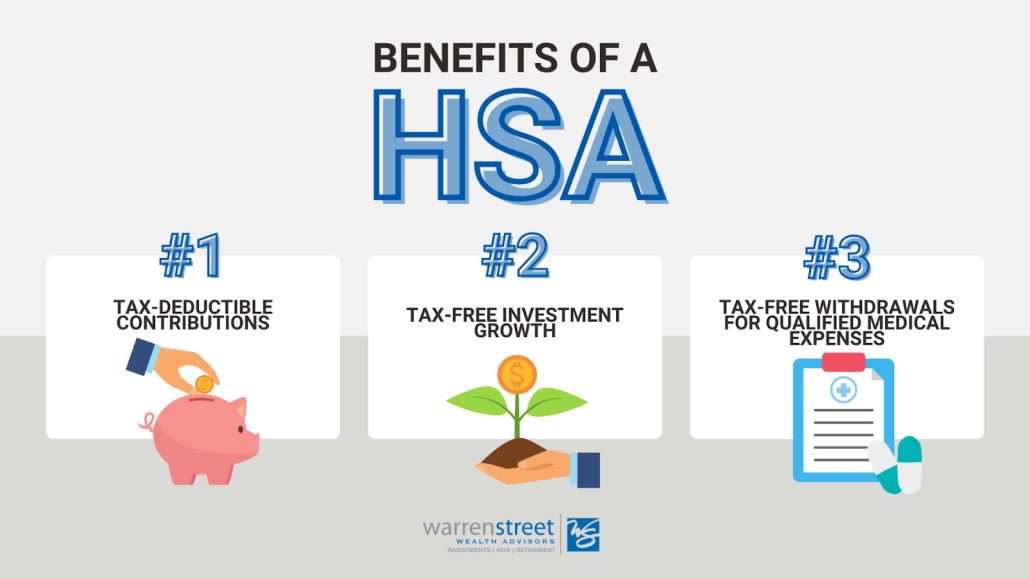
What makes HSAs especially appealing are their triple tax benefits:

  • Tax-deductible contributions.
  • Tax-free growth on investments inside the HSA.
  • Tax-free withdrawals at any time if the money is used for qualified medical expenses.

These features make HSAs one of the most tax-efficient savings vehicles available. But there’s another way to get more from your HSA: It can serve as a powerful retirement savings vehicle. 

Should You Use a High-Deductible Health Plan?

Before we get to the benefits of an HSA as an investment vehicle, how do you decide whether to use an HDHP in the first place? Choosing between a traditional plan and an HDHP depends on a few key factors.

First, compare the total potential cost under each plan. That means looking at monthly premiums, deductibles, coinsurance and out-of-pocket maximums. HDHPs typically offer significantly lower monthly premiums but come with higher deductibles. If you’re generally healthy and don’t expect to need much medical care, this tradeoff could work in your favor.

But be honest with yourself about your cash flow. If you had a sudden medical emergency, would you be able to cover the high out-of-pocket costs until your insurance kicks in? For people with chronic health conditions or frequent doctor visits, a traditional plan might offer more predictable costs.

Using an HSA as a Retirement Account

Once you’ve maxed out your traditional retirement accounts, an HSA becomes an excellent next stop. HSA contribution limits are $4,300 for self-only coverage and $8,550 for family coverage in 2025. You can leave that money in cash or invest it. You can, of course, use it to pay for qualified out-of-pocket medical expenses at any time. But you can also leave it in the account untouched, letting it grow and enjoy the power of tax-advantaged compounding—just as you would with an IRA or 401(k). 

Health care is one of the biggest expenses in retirement. So building a tax-free fund dedicated to future medical needs makes a lot of sense. According to recent estimates, a 65-year-old retiring in 2024 can expect to spend around $165,000 on health care in retirement—and that number is only expected to rise.

Here’s the kicker: When you turn 65, you aren’t limited to using your HSA for medical expenses. You can make withdrawals for non-medical expenses, and these will simply be taxed as income, just like withdrawals from a traditional IRA or 401(k). In short, your HSA can function like a traditional retirement account with the added perk of tax-free withdrawals for medical expenses at any age.

Your HSA as Part of Your Investment Strategy

Your HSA is a financial asset, whether it’s sitting in cash or invested in the market. As such, it can play an important role in your strategies for long-term asset allocation, diversification and rebalancing. Managed well, it can contribute meaningfully to your future financial security.

You can manage your HSA investments on your own. Or, depending on your HSA provider, we may be able to manage the assets within the account on your behalf. Even if direct management isn’t possible, we’re here to help you evaluate your options, choose appropriate investments and determine how best to incorporate your HSA into your long-term plan.

If you’re not sure whether an HDHP and HSA are right for you, let’s talk. Together, we can evaluate your health needs, cash flow and retirement goals to determine the best path forward.

Bryan Cassick, MBA, CFP®

Wealth Advisor, Warren Street Wealth Advisors

Investment Advisor Representative, Warren Street Wealth Advisors, LLC., a Registered Investment Advisor

The information presented here represents opinions and is not meant as personal or actionable advice to any individual, corporation, or other entity. Any investments discussed carry unique risks and should be carefully considered and reviewed by you and your financial professional. Nothing in this document is a solicitation to buy or sell any securities, or an attempt to furnish personal investment advice. Warren Street Wealth Advisors may own securities referenced in this document. Due to the static nature of content, securities held may change over time and current trades may be contrary to outdated publications. Form ADV available upon request 714-876-6200.

https://warrenstreetwealth.com/wp-content/uploads/2025/10/HSA-Benefits.png 1080 1080 Bryan Cassick, MBA, CFP® https://warrenstreetwealth.com/wp-content/uploads/2014/11/Warren_Street_logo-01.svg Bryan Cassick, MBA, CFP®2025-10-10 10:30:532025-10-10 10:31:01Should I Be Using a Health Savings Account?

Financial Planning for Open Enrollment: A Guide to Making Smart Choices

October 2, 2025/in Education, Financial Planning, General/by Justin D. Rucci, CFP®

Open enrollment is your annual opportunity to review and select your employee benefits for the upcoming year. While it might seem like just another task on your to-do list, the choices you make now can have a significant impact on your health and finances. Don’t simply “roll over” last year’s elections without a review. A proactive approach will ensure your benefits align with your needs and goals. 

Analyzing Your Health Insurance Options

Start by assessing your current situation. Think about your health needs from the past year: how many doctor’s visits did you have? What were your prescription costs? Do you anticipate any major life changes, such as getting married or having a baby? These factors will help you choose the right plan.

Understanding Key Terms

Before diving into plan specifics, it’s crucial to understand a few key terms:

  • Premium: The fixed monthly cost you pay for your insurance plan.
  • Deductible: The amount you pay out of pocket before your insurance coverage begins.
  • Copay: A fixed amount you pay for a doctor’s visit or prescription after your deductible is met.
  • Coinsurance: A percentage of costs you pay for covered services after the deductible is met.
  • Out-of-Pocket Maximum: The maximum amount you will pay in a year before the plan covers 100% of costs.

Comparing Plan Types: PPO vs. HDHP

The two most common types of health plans are a Preferred Provider Organization (PPO) and a High-Deductible Health Plan (HDHP).

  • A PPO typically has a lower deductible but higher premiums. It also offers more flexibility for seeing out-of-network doctors. This type of plan is generally best for people who use a lot of medical services, as the costs are more predictable.
  • An HDHP has a higher deductible but lower premiums. While you’ll pay more upfront for care, this type of plan makes you eligible for a Health Savings Account (HSA). An HDHP is often a great choice for generally healthy individuals or those who can comfortably afford the higher upfront costs if a major health event were to occur.

To help with your decision, compare the total estimated annual cost of each plan. For example, calculate the premiums plus potential out-of-pocket costs for a year with no major health events versus a year with a major surgery. This simple exercise can reveal which plan offers the most financial sense for your situation.

Maximizing Your Tax-Advantaged Accounts

In addition to health insurance, open enrollment is your chance to enroll in or update contributions to valuable tax-advantaged accounts.

Flexible Spending Accounts (FSA)

An FSA allows you to use pre-tax dollars for qualified medical or dependent care expenses, which lowers your taxable income. The key rule to remember is “use it or lose it”—funds typically do not roll over from one year to the next. Carefully estimate your upcoming year’s expenses to avoid forfeiting any money.

Health Savings Accounts (HSA)

An HSA is a powerful financial tool with a triple tax advantage:

  1. Contributions are pre-tax.
  2. Funds grow tax-free.
  3. Withdrawals for qualified medical expenses are tax-free.

Unlike an FSA, an HSA is portable, meaning the account belongs to you even if you change jobs. This makes it an excellent long-term savings tool. After age 65, you can withdraw funds for any reason without penalty, although non-medical withdrawals are subject to income tax. Remember, an HSA is only available if you are enrolled in an HDHP.

Reviewing Other Important Benefits

Don’t stop at health insurance; open enrollment is the perfect time to review your other benefits.

Retirement Contributions

Check your retirement contributions to your 401(k) or 403(b). If your employer offers a matching contribution, be sure you’re contributing at least enough to get the full match—it’s free money! Consider increasing your contribution rate by at least 1% each year. Small, consistent increases can make a huge difference over time.

Life and Disability Insurance

  • Life Insurance: Review your coverage needs based on your dependents and debts. Your employer may provide basic coverage, but you might need supplemental, voluntary coverage to fully protect your loved ones.
  • Disability Insurance: This benefit protects your income if you are unable to work due to illness or injury. Review your short-term and long-term disability options to ensure your income is protected.

Final Steps and Action Plan

Making your benefit selections requires a few final steps to ensure you’re fully prepared.

  1. Check Beneficiaries: In case of a major life change like a marriage or divorce, update the beneficiaries on all your accounts (retirement, life insurance) to ensure your assets go to the right people.
  2. Gather Your Information: Have all your plan documents, a list of your regular doctors, and an estimate of last year’s medical expenses ready. This information will help you make a more accurate and informed choice.
  3. Make Your Choices and Submit: Be mindful of the deadline and submit your final selections on time.

By taking the time to review your options and make informed decisions, you can ensure your benefits package is working for you and your financial well-being. Be sure to reach out to your advisor to discuss any of these items in more detail.

Justin D. Rucci, CFP®

Wealth Advisor, Warren Street Wealth Advisors

Investment Advisor Representative, Warren Street Wealth Advisors, LLC., a Registered Investment Advisor

The information presented here represents opinions and is not meant as personal or actionable advice to any individual, corporation, or other entity. Any investments discussed carry unique risks and should be carefully considered and reviewed by you and your financial professional. Nothing in this document is a solicitation to buy or sell any securities, or an attempt to furnish personal investment advice. Warren Street Wealth Advisors may own securities referenced in this document. Due to the static nature of content, securities held may change over time and current trades may be contrary to outdated publications. Form ADV available upon request 714-876-6200.

https://warrenstreetwealth.com/wp-content/uploads/2025/09/image-6.png 1152 2048 Justin D. Rucci, CFP® https://warrenstreetwealth.com/wp-content/uploads/2014/11/Warren_Street_logo-01.svg Justin D. Rucci, CFP®2025-10-02 08:56:462025-10-02 08:56:52Financial Planning for Open Enrollment: A Guide to Making Smart Choices

It’s Open Enrollment Season: Here’s How to Optimize Your Benefits

September 21, 2023/in Basic, Education, General/by Bryan Cassick, MBA, CFP®

Open enrollment season is upon us, with most plans allowing individuals and families to make changes to their 2024 benefit enrollments this fall. Now is the best time to make sure you are optimizing your benefits.

  1. Consider Your Health Insurance Options – When was the last time you reviewed your health insurance options? A lot can happen in a year, and each life change may mean your current health care plan may no longer be the best option. Whether you are on employer coverage, exchange coverage, or Medicare, we can help you review your options. 

Pro tip: If your medical plan allows it, consider utilizing a health care tax-advantaged account like an Health Savings Account (HSA) or Flexible Spending Account (FSA).

  1. Explore All Available Benefits – Many employer and retiree plans offer additional benefits beyond traditional health care options. Exploring these alternative benefits to see if any are applicable to your situation can save you time and money. Don’t forget about vision, dental, life, disability, excess liability and any other unique insurance being offered to you. This will ensure you are taking full advantage of the benefits available to you.

Pro tip: Employer-sponsored life and disability insurance can be cost effective and easy to obtain compared to buying your own private policies. 

If you are looking for guidance, Warren Street is available to assist in interpreting your health care and benefits package information as part of the 2024 open enrollment season. Let us know how we can help!

Bryan Cassick, MBA, CFP®

Wealth Advisor, Warren Street Wealth Advisors

Investment Advisor Representative, Warren Street Wealth Advisors, LLC., a Registered Investment Advisor

The information presented here represents opinions and is not meant as personal or actionable advice to any individual, corporation, or other entity. Any investments discussed carry unique risks and should be carefully considered and reviewed by you and your financial professional. Nothing in this document is a solicitation to buy or sell any securities, or an attempt to furnish personal investment advice. Warren Street Wealth Advisors may own securities referenced in this document. Due to the static nature of content, securities held may change over time and current trades may be contrary to outdated publications. Form ADV available upon request 714-876-6200.

https://warrenstreetwealth.com/wp-content/uploads/2023/09/Open-Enrollment-2023.png 1080 1080 Bryan Cassick, MBA, CFP® https://warrenstreetwealth.com/wp-content/uploads/2014/11/Warren_Street_logo-01.svg Bryan Cassick, MBA, CFP®2023-09-21 08:12:002024-11-07 09:22:10It’s Open Enrollment Season: Here’s How to Optimize Your Benefits

Recent Posts

  • Navigating Health Insurance Enrollment SeasonSeptember 24, 2026 - 3:20 pm

    As health insurance open enrollment season arrives, reviewing your options is key to making sound financial and healthcare decisions. Learn what factors to evaluate beyond monthly premiums—such as deductibles, out-of-pocket maximums, HSA contribution limits, and special enrollment rules—to select the coverage that best fits your budget and healthcare needs.

  • 5% and Counting: Is the US Treasury Back?September 15, 2026 - 3:30 pm

    With 10-Year US Treasury yields breaching 5%, explore the key economic drivers behind the surge and what higher interest rates mean for stocks and bond portfolios.

  • Beyond the Magnificent Seven: A 2026 Midyear Check-InJuly 29, 2026 - 3:40 pm

    The AI rally has packed its bags: mega-cap tech has stalled while small caps and emerging markets lead 2026 gains. From chip supply chains and rising corporate debt to Federal Reserve policy shifts under Chair Kevin Warsh, we analyze where market risks are building and how we’re positioning portfolios for the road ahead.

  • Meet the Team: Victor Campos, CPA, CFP®July 21, 2026 - 9:05 am

    Get to know Victor Campos, the newest Lead Advisor at Warren Street. Victor utilizes his extensive background as both a Certified Public Accountant (CPA) and Certified Financial Planner™ (CFP®) to deliver holistic financial strategies for our clients. Check out the full interview to discover how his background, values, and dual credentials make him a massive asset to your financial journey.

Categories

  • Basic
  • Chevron
  • Education
  • Financial Planning
  • General
  • Intermediate
  • Investing
  • Quarterly Economic Update
  • Retirement
  • Taxes
  • Uncategorized

Contact Us

(714) 876-6200

hello@warrenstreetwealth.com

Warren Street Wealth Advisors, LLC
200 Spectrum Center Drive, Suite 300,
Irvine, CA 92618

As a Registered Investment Advisor, Warren Street Wealth Advisors, LLC is required to file form ADV to report our business practices and conflicts of interest. Please call to request a copy at 714-876-6200.

IMPORTANT DISCLOSURE INFORMATION

Stay Connected

© Copyright 2026 - Warren Street Wealth Advisors, LLC - 200 Spectrum Center Drive, Suite 300, Irvine, California 92618 - Enfold Theme by Kriesi
  • Link to Facebook
  • Link to Instagram
  • Link to LinkedIn
  • Link to Youtube
  • Link to Yelp
  • Link to X
  • Link to Mail
Scroll to top Scroll to top Scroll to top